Living with Wildlife

Close-up of a Short Beaked Echidna

Hume City is home to a diverse range of native wildlife. As our community grows alongside wildlife habitat, encounters with animals may occur in our parks, reserves, waterways and neighbourhoods, and on our roads.

Most interactions between people and wildlife are positive and rewarding. However, some situations can raise questions about safety, animal welfare, property impacts or how best to respond. Understanding wildlife behaviour and knowing how to coexist responsibly can help protect both our native animals and our community.

By making informed choices and respecting wildlife in their natural environment, we can all play a role in conserving Hume City's unique biodiversity for future generations.

Fruit Net Swap and Surrender

Hume residents can surrender unwanted nets at any of ten venues around Hume City during the venue’s opening hours. Venues listed below.

To swap a net for a wildlife-friendly alternative, residents must attend one of the events listed below.

Protect your fruit and protect our wildlife.

Some types of fruit tree netting can seriously injure or kill native wildlife, including birds, bats and possums. In Victoria, household fruit tree netting must have a mesh size of 5mm x 5mm or smaller when fully stretched.

Not sure if your netting is wildlife-safe?

Try pushing your finger through the mesh. If your finger can pass through, the holes are likely too large and this netting is illegal to use.

When using netting, choose white, cross-weave netting, secure it tightly so animals cannot become trapped, or consider using fruit bags or sleeves to protect individual branches.

The Fruit Net Swap and Surrender campaign makes it easy to do the right thing. Surrender your old or illegal fruit netting and swap it for wildlife-safe netting to help protect your harvest without putting local wildlife at risk.

Council has large fruit nets (2.8 m cube), fruit sleeves (30 cm x 90 cm) or a 10 pack of fruit bags (30 x 30cms) available for the swap. Only one item will be swapped per household, but you can surrender as many illegal nets as you have.

Residents can swap or surrender fruit netting at selected events across Hume.
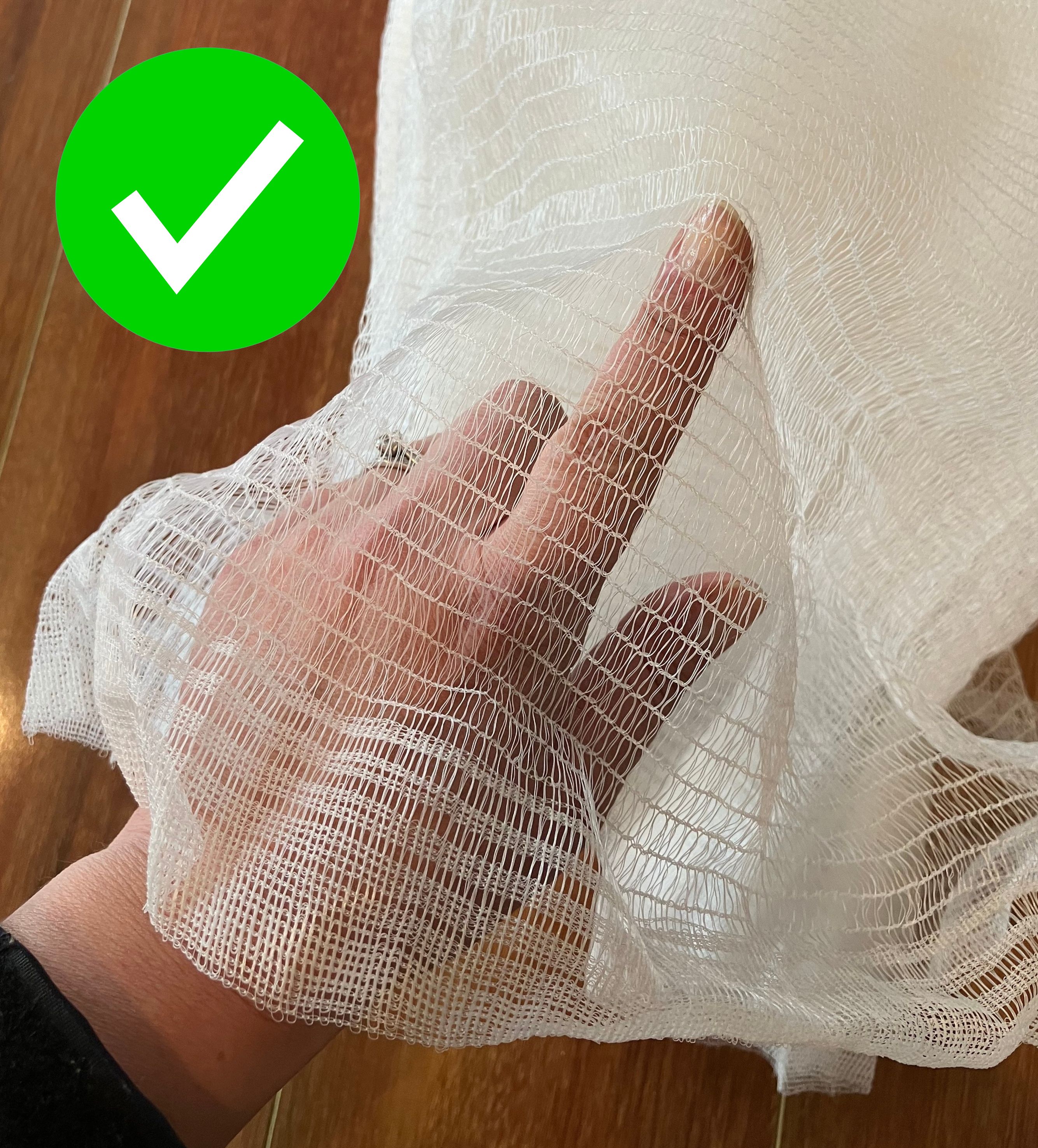
Legal-household-fruit-tree-netting.jpgIllegal-household-fruit-tree-netting.jpg

Upcoming swap events

You can swap or surrender your netting at the following events:

Saturday 21 November 2026, 10am - 12pm 
Sunbury Neighbourhood House, 531 Elizabeth Drive, Sunbury  
Part of the monthly Repair Cafe

Saturday 21 November 2026, 1.30pm - 2.30pm 
Broadmeadows Library, 1093 Pascoe Vale Road, Broadmeadows
Part of the monthly Plant and Produce Swap

Friday 27 November 2026, 11am - 12pm
Kismet Creek, 49 Racecourse Road, Sunbury
After the Bats and Birds event

Friday 27 November 2026, 6pm - 7pm
Emu Bottom Wetlands, carpark, 300 Racecourse Road, Sunbury
Before the Platypus Peekaboo event

Saturday 12 December, 10am - 12pm
Kalkallo Community Centre carpark, 33 Toyon Road, Kalkallo

Saturday 12 December, 1pm -3pm
Lake McIvor Reserve, 27-51 Lakeside Drive, Roxburgh Park

Surrender locations

From November 2026 to March 2027, look for the branded Surrender Your Net recycling bins during business hours at: 

Check this webpage for updated and future event details as this campaign will run until March 2027.

The surrendered nets will be recycled into new plastic products and not go into landfill.

Check your nets today and help keep Hume’s wildlife safe.

Hume City Council is participating with 16 other local governments and in partnership with The Conservation Regulator, Zoos Victoria, RSPCA Victoria, Wildlife Victoria, and Animal Welfare Victoria.

For more information, check Grey-headed flying fox netting.

Kangaroos and Wallabies

Kangaroos and wallabies are commonly found in Hume City's grasslands and rural areas, particularly at dawn and dusk. While they are generally shy, they can become aggressive if they feel threatened or have become accustomed to being fed. Feeding wildlife can change natural behaviours and increase the risk of injury to both people and animals.

Tips for living with kangaroos and wallabies:

  • Do not feed kangaroos or wallabies, food such as bread can cause serious health issues, including the often fatal disease known as Lumpy Jaw.
  • Keep your distance, avoid approaching large males, mothers with joeys, or any animal that appears stressed.
  • Drive with caution, be alert for wildlife on roads, especially during dawn and dusk when animals are most active.
  • Keep dogs on a lead, this helps protect both your pet and local wildlife in areas where kangaroos and wallabies live.

View our kangaroos fact sheet(PDF, 2MB) to help you learn about what to do if you spot a kangaroo.

Snake awareness

 Hume is home to Eastern Brown, Red-bellied Black, Lowland Copperhead and Eastern Tiger Snakes. Snakes are more active in spring through to autumn, and will often seek warm places such as concreted surfaces to sunbake, near houses and infrastructure in parks and reserves. Snakes are also commonly seen near waterways and wetlands, in search of food such as frogs and lizards. For more information, read the Living with Wildlife - Snakes factsheet(PDF, 1MB).

When walking through areas such as parks and reserves, be aware that we share the space with protected wildlife such as snakes. Where possible, stay on paths and avoid walking in long grass, including your pets.

What to do if you see a snake in a public area or your property

  • Stay calm, do not panic. If you stand still the snake is not likely to hurt you
  • Do not approach or attempt to catch or kill the snake, as it will defend itself
  • When safe to do so calmly move away from the snake to a safe distance and keep it under observation if you decide to remain in the area
  • Keep children, pets and others away from the area containing the snake

While snake bites are rare, they do pose a serious health risk. All species of snakes found in Hume City are venomous. If you have been bitten by a snake call 000 immediately for emergency assistance.

Snakes can be a problem for your pets, but usually only if the pet attacks first. Anti-venom may be available from vets, if pets do get bitten, it is critical that pets are taken to a vet as soon as possible after an encounter with a snake.

Snake relocation service

Council may engage a professional snake handler to relocate snakes found on Council maintained land to suitable habitat nearby. Contact Customer Service via phone (not email) on 9205 2200 to report a snake on Council land.

If a snake handler is called to a location there may be time-lag between arriving on-site and there is no guarantee that the snake handler will locate the snake, as snakes tend to move around the landscape. There may be occasions when the snake handler is unavailable to attend the site. Even if a snake is removed from an area, it is likely that there are other snakes in the vicinity, so snake sightings may be a common occurrence in certain locations, such as waterways and wetlands.

If you do see a snake on Council maintained land, please remember to stay calm and move slowly away from the snake when safe to do so.  If you see a snake around your private residence, stay calm, move slowly away from the snake when safe to do so and keep children, pets and others away from the area.  If you would like to engage with a snake handler at your own expense, contacts are available online, or through existing business directories advertising animal control services.

Swooping Magpies

In spring, some male Magpies swoop to protect their nests and young from perceived threats. This is a learnt behaviour to drive certain people out of their territory. They rarely make contact or injure people. Magpies stop swooping once their chicks have fledged.

Tips for avoiding swoops:

  • Keep your distance, avoid known nesting areas during breeding season and stay at least 100 metres from active nests where possible.
  • Face the bird, magpies are more likely to swoop from behind, so maintain eye contact and point towards the bird as you move away.
  • Protect your head and eyes, wear a wide-brimmed hat and sunglasses, or carry an umbrella when walking through known swooping areas.
  • Stay calm, avoid waving your arms, yelling, or throwing objects, as this may increase defensive behaviour.
  • Leave young birds alone, fledglings are often cared for by their parents on the ground. Approaching or handling them may trigger swooping.

View our Magpies fact sheet(PDF, 1MB) to help you learn about what to do if you spot magpie.

Fruit Bats (Flying-foxes)

Fruit Bats are native bats that play an important role in pollination and seed dispersal. As natural habitat is lost, they are increasingly found in urban areas where flowering and fruiting trees provide a reliable food source.

The Grey-headed Flying-fox (Fruit Bat) is a threatened species protected under state and federal legislation.

Living with Fruit Bats

Fruit Bats may be noisy when feeding and can leave droppings, odours, or chewed fruit beneath trees. However, they are usually temporary visitors and often move on once food sources are exhausted.

Tips for living with fruit bats:

  • Be tolerant, as Fruit Bats rarely stay in one location for long.
  • Use wildlife-safe netting with mesh smaller than 1 cm to protect fruit trees and gardens.
  • Consider wildlife-friendly fruit protection bags as an alternative to netting.
  • Never handle sick or injured Fruit Bats. Contact a licensed wildlife rescue service for assistance.

Remember: Fruit Bats are protected native wildlife and provide important benefits to our environment.

View our Fruit Bats fact sheet(PDF, 506KB) to help you learn about what to do if you spot fruit bats.

Living with Possums

Common Brushtail and Ringtail Possums are active at night and often shelter in roofs, sheds, and dense vegetation. Possums are protected native animals, and any relocation must be undertaken by a licensed wildlife carer or authorised wildlife handler.

Tips for living with possums:

  • Prevent roof access by sealing entry points, but only after confirming the possum has left.
  • Install a nest box in a nearby tree to provide an alternative shelter.
  • Use wildlife-friendly deterrents, such as motion-activated lights or scent-based repellents, to discourage possums from specific areas of your garden.

View our Possums fact sheet(PDF, 2MB) to help you learn about what to do if you spot possums.

Cockatoos and Corellas

Cockatoos and corellas are highly intelligent and social birds. Their natural curiosity can sometimes lead to damage to buildings, outdoor furniture, and other property. Feeding these birds can change their natural behaviour, attract large flocks, and increase conflict between people and wildlife.

Tips for living with cockatoos and corellas:

  • Do not feed cockatoos or corellas. Feeding encourages birds to gather in large numbers and can reinforce unwanted behaviours.
  • Protect valued areas using visual deterrents such as reflective objects or predator-shaped silhouettes.
  • Change deterrents regularly. Cockatoos are adaptable and can quickly become accustomed to deterrents that remain in the same place.

View our Cockatoos and Corellas fact sheet(PDF, 2MB) to help you learn about what to do if you spot corellas or cockatoos.

Feeding wildlife

Feeding wildlife can harm animals, disrupt natural behaviours, attract pests, and increase risks to both wildlife and the community. Some foods can even cause disease or death.

Local Law prohibits feeding native wildlife, and fines may apply where it impacts people, wildlife, or the environment.

Why you shouldn't feed wildlife:

  • Human food can make wildlife sick and may cause disease, injury, or deformities.
  • Feeding alters natural behaviours, making animals dependent on people and less able to find their own food.
  • Food scraps attract pests and predators, such as rats, foxes, and stray cats.
  • Feeding near roads and public spaces increases the risk of wildlife being injured by vehicles.

View our feeding wildlife fact sheet(PDF, 2MB) to help you learn more.

If you choose to feed wildlife, provide only small amounts of natural foods such as fruit, vegetables, or seeds. Keep feeding areas clean and avoid encouraging wildlife to rely on human food.

Instead of feeding wildlife:

  • Place unwanted food in your food and garden organics (green lid) bin.
  • Create a habitat garden with native plants and water sources.
  • Enjoy wildlife from a distance and let animals find their own food naturally.

Leading wildlife experts and organisations, including Wildlife Victoria, Zoos Victoria, WIRES and BirdLife Australia, recommend not feeding wild animals.

The best way to help wildlife is to protect their natural habitat, not feed them.

For more information about feeding wild birds in Australia, visit BirdLife Australia's guide - A guide to feeding wild birds in Australia

Injured, sick, or orphaned wildlife

If you come across injured, sick, or orphaned wildlife, act quickly but carefully to give the animal the best chance of survival. Keep your own safety in mind too.

Observe from a distance, some animals (especially young birds or marsupials) may appear abandoned but are still being cared for by their parents.

Do not touch unless necessary, wildlife can be easily stressed or may lash out when frightened. Only handle the animal if it is in immediate danger (e.g., on a road, being attacked by a pet).

Contact a wildlife rescue organisation:

  • Wildlife Victoria: call (03) 8400 7300 or make a report online using the link here.
  • Department of Energy, Environment and Climate Action (DEECA) have an online tool to locate local wildlife carers for specific animals.
  • Department of Energy, Environment and Climate Action (DEECA) have a Wildlife Emergency App (download from Apple Store or Google Play) If you come across injured wildlife during emergency events you can report these directly to DEECA via the Wildlife Emergency App or by phone 136 186 or Wildlofe Victoria on 03 8400 7300
  • Local vet clinics, many are trained to treat or assess native wildlife. There is no cost charged by vets to assist native animals.

Gently contain the animal: If safe to do so, wear gloves or use a towel to gently place the animal in a well-ventilated box lined with a soft cloth. Keep it warm, quiet, and dark to reduce stress.

Do not offer food or water: Feeding or watering injured wildlife can do more harm than good. Wait until a licensed wildlife carer advises you on next steps.

Your actions could save a life. By taking the right steps and seeking expert help, you are giving injured wildlife the best chance of recovery and return to the wild.

Why are deceased native animals spray painted with a cross or 'X'?

Wildlife rescuers spray paint a cross or 'X' on animals such as kangaroos, wallabies, or wombats after checking their pouch for young. This helps others know the pouch has already been checked. Visit Pouch checks | Wildlife Victoria for more information.

Create and support habitat

Our native wildlife is richly diverse and each species has their own unique habitat needs to survive and breed.

Unfortunately, this rich biodiversity is under great threat. Habitat loss, invasive species, and the growing pressures of climate change are pushing many plants and animals toward decline, and ultimately, to extinction.

We can all play a vital role in protecting Australia’s natural heritage - by living more harmoniously with wildlife, reducing the risks they face, getting them help when they need it, and creating safe habitat.

Visit the Gardens for Wildlife page to find out how the free program supports households, schools and businesses in Hume to create wildlife-friendly gardens.

You can also download the fact sheet about farm dam restoration to create habitat for the Growling Grass frog(PDF, 264KB).

Responsible fishing

Hume offers a range of fishing locations across the municipality, including creeks and lakes stocked with species such as trout and redfin.

To find out more on our fishing spots, you can contact one of our local angling clubs below:

Craigieburn Angling Club
Greenvale Angling Club
Sunbury Angling Club

When fishing, help protect our wildlife by following these simple guidelines:

  • Take all rubbish home, including fishing line, hooks, bait containers and other litter.
  • Dispose of fishing gear responsibly, as discarded tackle can injure wildlife and damage habitats.
  • Respect wildlife and the environment by leaving natural areas as you found them.
  • Fish legally and sustainably, following Victorian fishing regulations, bag limits and size limits.
  • Carry a valid Recreational Fishing Licence unless exempt.

A Recreational Fishing Licence is required for most forms of recreational fishing in Victoria's marine, estuarine and inland waters.

For more information on licences, rules and responsible fishing practices, visit the Victorian Fisheries Authority or contact one of Hume's local angling clubs.

Remember: Healthy waterways support healthy fish populations and protect the wildlife that share these habitats.